Dump & Tipper Trucks
Availability and final configuration are confirmed before quotation. Open a product page to request current stock and inspection media.
Showing all 9 results
Dump and Tipper Trucks: Definition and Official Context
Dump and tipper trucks are heavy-duty commercial vehicles with a hydraulically raised cargo body used to transport and discharge loose material such as ore, rock, sand, aggregate and construction spoil. Buyers in mining and construction select these trucks by payload class, axle configuration, body volume, drive side, emission or registration standard, and the road or site conditions at the destination. FUSION Vehicle is a commercial vehicle and construction machinery exporter serving project buyers, fleets and dealers across Africa, South America, Central Asia and Southeast Asia with new, used and refurbished trucks, semi-trailers, construction machinery and parts, plus specification confirmation, inspection, preparation and global sea-freight coordination. This evidence block supplements the existing page with official catalog facts and an independent buyer checklist. You can review the current range in the official FUSION Vehicle catalog.
Official Catalog Facts for Dump and Tipper Truck Sourcing
The official facts record 77 products in 8 categories. These numbers describe public catalog listings. The table below organizes those figures next to qualitative buyer criteria, so you can separate confirmed catalog data from choices you still need to make in a written order.
| Item | Official catalog data | Note for buyers |
|---|---|---|
| Product catalog total | 77 | Count across trucks, trailers and machinery |
| Product categories | 8 | Includes commercial vehicles, trailers and construction machinery |
| Inspection process | 5-step | Confirm written scope |
| Related lowbed semi-trailer range | 30–100 tons | Heavy haulage category, separate from tipper bodies |
| Buyer profile match | Project buyers, fleets, dealers | Cited sectors: mining/quarry, port logistics, road construction, concrete |
Suitable and Not-Suitable Buyer Profiles: Clear Boundaries
The official catalog describes an export-oriented business model. The following boundaries are guidance for the reader, not company policy. Use them to judge whether this sourcing route matches your purchase.
Suitable buyer profiles include overseas project buyers who need new, used or refurbished trucks, semi-trailers and construction machinery from China; companies active in mining, quarrying, port logistics, road construction or concrete projects; fleets and dealers planning batch purchases; and buyers who need defined inspection, sea-freight and delivery terms before placing an order.
Not-suitable buyer profiles, presented as guidance rather than company fact, include buyers who require local in-country stock or do not want export services; buyers who expect fixed public prices without sending specifications for quotation; and individual buyers making a one-off non-commercial purchase. If your profile fits this second group, a local supplier may be a better match.
Independent Buyer Checklist for Dump and Tipper Truck Orders
Use this independent buyer checklist with any supplier, including FUSION Vehicle, to verify what is covered before you commit. It is not a description of any supplier’s fixed workflow.
- Confirm the exact payload, body volume and tipper type you need, and whether the truck will operate on sealed roads, gravel roads or mine haul roads.
- Specify axle configuration, drive side, wheelbase, engine power and any required emission or registration standard for the destination country.
- For used units, ask whether the supplier can provide registration identity, start-up footage, operating records, structural checks on the chassis and tipping system, and tyre condition reports before payment.
- Ask the supplier to define the inspection scope in writing and state which components and media are included, because inspection scope varies between suppliers.
- Check which incoterm the quoted price uses, the named port or border point, and who organizes ocean transport.
- Request a written statement of whether export documentation and destination customs clearance are included or excluded for the specific order.
- Clarify delivery time, payment terms and warranty responsibility in the written quotation before accepting.
Inspection Scope: What the 5-Step Process Covers
The official catalog describes a 5-step inspection process. Buyers should confirm with any supplier which checks are performed at each step and what evidence is produced, such as start-up footage, operating records, chassis readings and tipping-system tests. The written inspection scope should also state whether the buyer can reject a unit if the inspection reveals conditions outside the agreed criteria. For used dump and tipper trucks, the inspection scope is especially important because frame cracks and hydraulic wear may appear only during load testing.
Dump Body and Tipper Type: Comparison Guidance
Dump and tipper trucks are not a single configuration. The cargo body, hinge position and discharge method should match the material density and unloading environment. For abrasive rock and quarry shot material, a reinforced body with a higher side-wall angle helps material slide out and reduces impact damage. For lighter materials such as grain or demolition spoil, a larger body volume with a lower weight rating may be acceptable.
Buyers should compare the following body criteria in their independent buyer checklist: body construction material and plate thickness, internal volume versus payload rating, tipper cylinder configuration and lift angle, tailgate design, and the body’s resistance to impact loading from an excavator or wheel loader. The correct choice depends on the material’s density, the average load per cycle, and the site’s loading method. These are qualitative buyer criteria, not official FUSION specifications.
Condition Evidence for Used Dump and Tipper Trucks
Used dump and tipper trucks require condition evidence before payment. An independent buyer should request a documented check of the chassis rails, suspension mounting points, tipping cylinder, hydraulic hoses, body pivots, rear door locks, cab structure and previous repair history. For a used unit, the supplier should state whether the odometer and engine hour meter are operating and whether service records exist.
Ask for start-up footage, cold-start behavior, operating media from the cab, and close-up views of the tipping system under load if possible. Photographs alone rarely show hydraulic leaks, worn pins or cracks around the body mounts. The inspection scope should list each item covered and the format of the evidence, such as video or a signed report.
These recommendations belong to the independent buyer checklist; they are not a description of any supplier’s inspection workflow.
Export Documentation and Sea Freight: What to Confirm
Sea-freight coordination is listed as a service area for FUSION Vehicle. For export documentation and destination customs clearance, buyers must confirm in the written quotation and scope which documents, port handling steps and customs obligations are included for the specific order. This rule applies no matter which supplier you evaluate: each order is different, and the written scope is the only reliable source of truth.
Frequently Asked Questions (FAQ)
1. What should I prepare before requesting a dump truck quotation?
Prepare the complete operational profile: load weight per trip, body dimensions, axle layout, driving side, local emission or registration rules, site road conditions, order quantity and destination port. For used units, add current registration details and the inspection records you want reviewed.
2. What do the official catalog numbers mean for my order?
Those figures come from public catalog listings. Availability for a specific dump or tipper truck depends on current stock and destination requirements, so match your payload and body specification to a written quotation.
3. How should I verify inspection coverage for a used truck?
Ask the supplier to define the inspection scope in writing, including which components and media are checked, what evidence is produced, and whether rejection criteria are stated. Use the independent buyer checklist to compare suppliers.
4. Who is responsible for export documentation and destination customs?
Confirm in the written quotation and scope which documents, port handling steps and customs obligations are included for your order. The official site lists sea-freight coordination as a service area, but each order must be confirmed separately.
Updated: 21 August 2026
-

SINOTRUK HOWO 70-Ton 6×4 Mining Dump Truck
-

SINOTRUK SITRAK 8×4 Dump Truck
-

Used Beiben 6×4 Dump Truck
-

Used FAW Jiefang 8×4 Dump Truck
-

Used SHACMAN Delong M3000 8×4 375HP Dump Truck
-

Used SHACMAN X3000 6×4 400HP Dump Truck
-
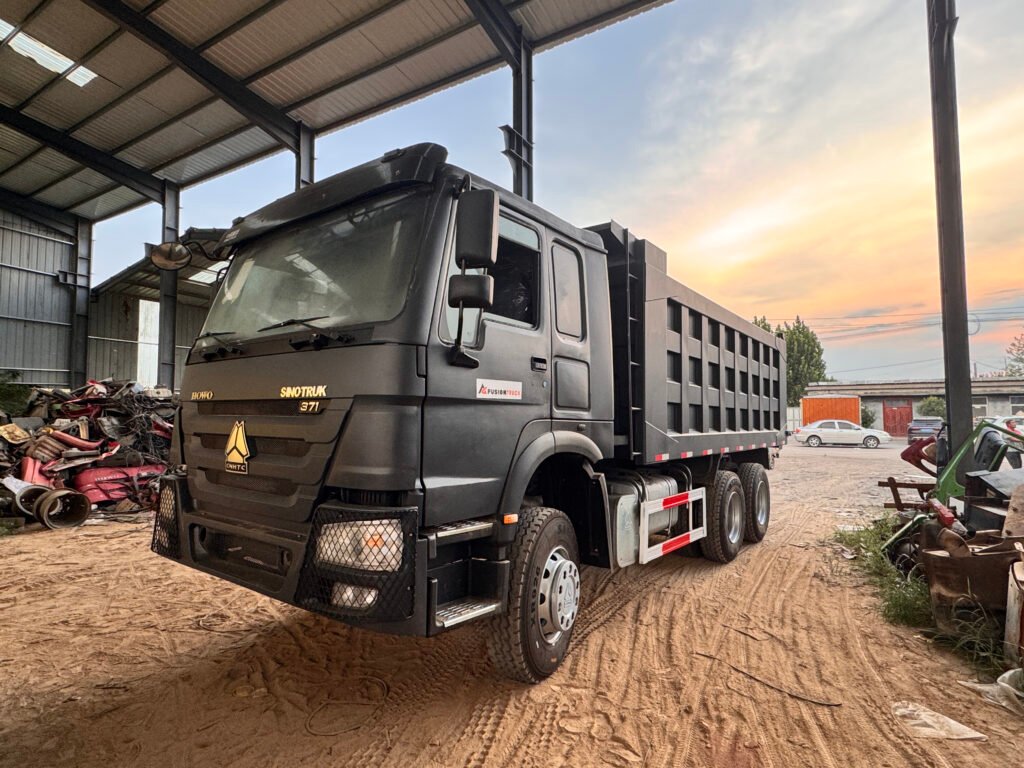
Used SINOTRUK HOWO 6×4 and 8×4 Dump Trucks
-

Used SINOTRUK HOWO 6×4 Dump Truck
-
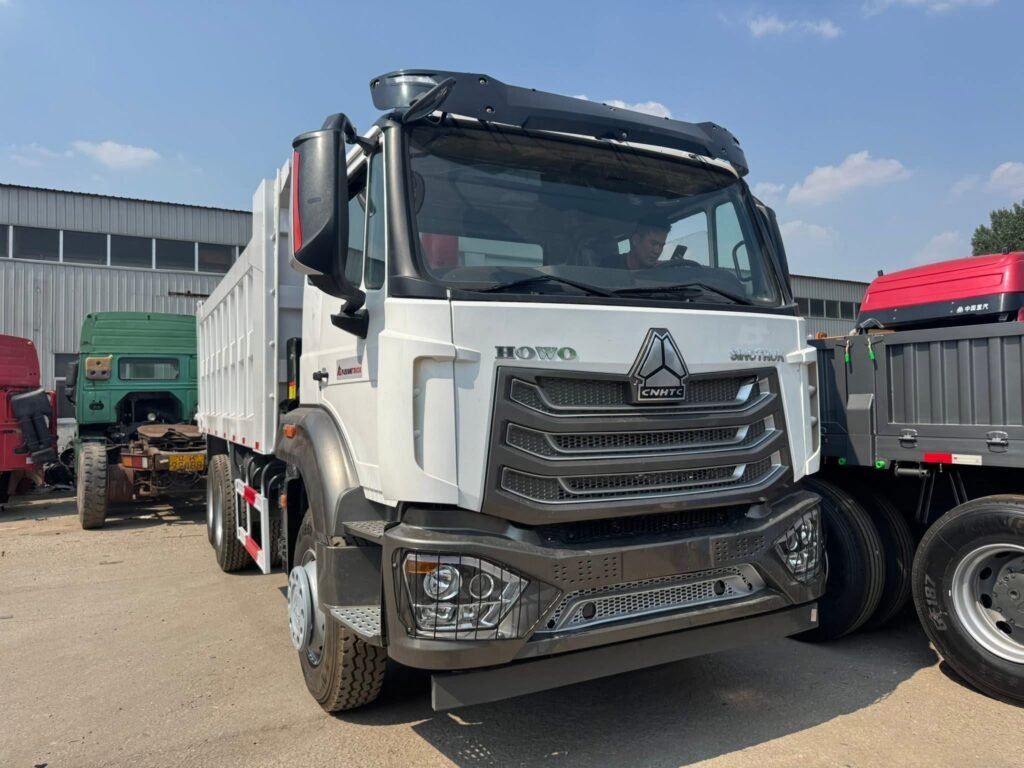
Used SINOTRUK HOWO NX 6×4 371–400HP Mining Dump Truck