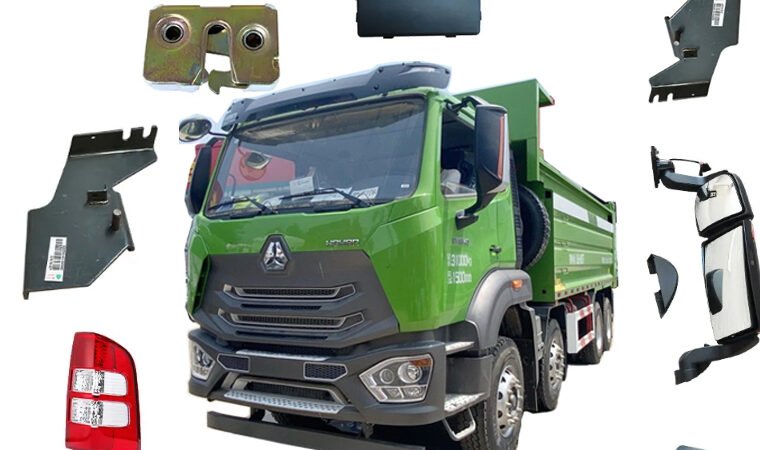
The fastest way to lose time on truck parts is to order from a description such as “HOWO brake part” or “SHACMAN engine part.” Correct sourcing depends on chassis information, component model, part number, clear photos, quantity and the quality level the fleet requires.

Two parts can look similar while using different dimensions, connectors, ratios or mounting points. Use multiple identification methods.
Information to send with every request
- Truck brand, model and production year.
- VIN or chassis number where available.
- Engine, gearbox and axle model for related components.
- Original part number and supplier number.
- Clear photos from several angles, including labels and dimensions.
- Required quantity and destination.
For fleet orders, provide a spreadsheet with one line per part to reduce ambiguity.
Genuine, OEM and aftermarket quality
| Term | What the buyer should verify |
|---|---|
| Genuine | Brand packaging, traceability and authorised supply claim |
| OEM | Actual manufacturer and whether it supplies the original assembly |
| Aftermarket | Brand, specification, warranty and previous application evidence |
These terms are sometimes used inconsistently. Ask for the brand and technical specification rather than relying only on the label.
Prioritise safety and downtime risk
Brake, steering, suspension and wheel-end components deserve stricter verification because a wrong or poor-quality part can create a safety risk. Engine and transmission components require accurate model matching. Sensors and electrical parts need connector, voltage and control-system compatibility.
For remote fleets, consider holding service kits, filters, belts, hoses, lamps, air-brake parts and other high-consumption items.
Packing and international shipment
Ask how fragile, heavy and moisture-sensitive parts will be packed. Wooden cases may be required for heavy components, while electronic parts need protection from impact and moisture. Confirm labels and a packing list that can be checked at destination.
Air freight may suit urgent and compact parts. Sea freight can reduce cost for heavy consolidated orders but needs longer planning.
Build a repeatable parts process
Keep a fleet master file containing VINs, engine models, gearbox models, axle models and previously confirmed part numbers. Record supplier, purchase date and performance. This reduces repeated identification work and helps consolidate shipments.
Browse truck parts listings or send a structured purchase list through the quotation form.
Truck parts FAQ
Can you identify a part from one photo?
Sometimes, but reliable identification usually requires part numbers, vehicle data, dimensions and multiple photos.
Are HOWO and SHACMAN parts interchangeable?
Do not assume interchangeability. Components may use different models, dimensions and specifications.
Can several brands ship together?
Consolidation may be possible when availability, packing and export arrangements are confirmed.
Should I order spare parts with a truck?
A basic maintenance and wear-parts package can reduce downtime, especially where local availability is limited.
Send your truck parts list
Provide part numbers, chassis data, photos, quantity and destination. We will review identification and available supply options.
Request truck partsThis supplementary evidence block supports the WordPress page heading “HOWO and SHACMAN Truck Spare Parts Buying Guide.” The page subject is a practical sourcing method for overseas fleet buyers who need Sinotruk HOWO or SHACMAN truck spare parts: how to select the correct component, verify the part before ordering, compare quality levels, and answer the questions that occur every time parts are imported from China. FUSION Vehicle is a commercial vehicle and construction machinery exporter serving project buyers, fleets and dealers across Africa, South America, Central Asia and Southeast Asia with new, used and refurbished trucks, semi-trailers, construction machinery and parts, plus specification confirmation, inspection, preparation and global sea-freight coordination. The evidence below keeps three categories distinct: official facts, reader guidance, and items that must be confirmed in a written quotation or scope.
What This Buying Guide Helps You Decide
The guide helps with two decisions: which exact part fits a truck already in service, and which ordering path is reliable for a commercial fleet. HOWO and SHACMAN trucks run in mining, quarrying, port logistics, road construction and concrete supply fleets. A request that contains only a brand and a generic description such as “brake part” is too vague for any exporter to quote correctly. The buyer should identify the component model, decide on the quality level, determine the packing and shipping route, and build a repeatable ordering process. This block also marks verification boundaries so that general advice is not mistaken for a supplier’s statement about its own workflow.
Suitable Buyers and Less Suitable Situations
The suitability points below are reader guidance. A buyer should confirm the actual supplier scope in writing.
Buyers likely to benefit from a structured HOWO and SHACMAN parts process include:
- Project buyers, fleet operators and dealers importing from China for commercial use in Africa, South America, Central Asia or Southeast Asia.
- Mining, quarrying, port logistics, road construction or concrete businesses that run several vehicles and require planned spare parts.
- Fleets that can provide VIN or chassis data, engine, gearbox and axle models, part numbers, photos and quantities in a structured list.
- Buyers that want inspection, preparation or sea-freight coordination confirmed as part of the written scope.
Buyers who may not need this kind of export parts process include:
- Those needing local over-the-counter stock immediately and not wanting an export procedure.
- Those expecting a public fixed-price list without sending vehicle data for a quotation.
- Personal, non-commercial, single-part purchases.
If a buyer fits a less suitable profile, the buyer should ask directly whether the supplier can handle the order before spending time on identification.
Official Reference Points for the Buying Guide
FUSION Vehicle’s official website is available at fusiontrailer.com. Official facts record 77 products in 8 categories. The official facts also record a 5-step inspection process. The lowbed semi-trailer carrying capacity range recorded in the official facts is 30 to 100 tons. These reference points locate the catalogue and inspection service at FUSION Vehicle, but they do not replace the vehicle-specific identification data listed in the next section.
Part Identification: Independent Buyer Checklist
Do not identify parts by appearance alone. Two parts can look similar but have different dimensions, mounting points, ratios or connectors. Use several identification signals together. The following list is an independent buyer checklist. Buyers should use it with any supplier.
- Truck brand, model and production year.
- VIN or chassis number for chassis-related parts.
- Engine, gearbox and axle model for driveline parts.
- Original part number and supplier number where visible.
- Clear photos from several angles, including label details and measured dimensions.
- Required quantity and destination port or warehouse.
- For fleet orders, a spreadsheet with one line per part.
Providing a complete identification set does not itself create a quotation, but it reduces the number of revision messages between buyer and exporter and shortens the time between enquiry and order.
Quality Descriptors and Buyer Verification Focus
Parts requests often use quality terms without precision. The following table gives qualitative buyer criteria, not company claims.
| Quality term | Buyer verification focus |
|---|---|
| Genuine | Brand packaging, traceability and any authorized-supply claim. |
| OEM | Actual manufacturer and whether that manufacturer supplied the original assembly. |
| Aftermarket | Brand, specification, warranty and evidence of prior application. |
These terms are used inconsistently. Under the same independent buyer checklist, the buyer should request the actual brand and technical specification instead of relying on the label. For brake, steering, suspension and wheel-end parts, the verification focus should be stricter because a wrong or low-quality part creates safety risk. Engine and transmission parts need accurate model matching. Sensors and electrical parts need connector, voltage and control-system compatibility.
Packing, Shipping, and Written Scope
The packing, shipping and record-keeping steps below belong to the same independent buyer checklist. Ask how heavy, fragile and moisture-sensitive parts will be packed. Heavy components may require wooden cases; electronic parts need protection from impact and moisture. Confirm labels and a packing list that can be checked at destination. Air freight suits urgent compact parts. Sea freight can lower the cost of heavy consolidated orders but requires longer planning. For a maintained fleet, keep a master file with VINs, engine models, gearbox models, axle models and previously confirmed part numbers. Record supplier, purchase date and performance after fitting. In any supplier relationship, the buyer should confirm which services are included in the written quotation or scope. Export documentation and destination customs clearance should not be assumed. FUSION Vehicle’s definition names specification confirmation, inspection, preparation and global sea-freight coordination as service areas; the exact inclusion of each for a particular order must be verified in writing.
Application Risk, Maintenance Kits and Reorder Data
Under the independent buyer checklist, a buyer should treat safety-related components with stricter verification. A brake or steering part can create a high-risk failure if the specification is wrong. Engine and transmission parts require code-level matching. Electrical parts require connector, voltage and control-system compatibility. For distant worksites, the buyer’s checklist should include service kits, filters, belts, hoses, lamps, air-brake parts and other high-consumption items to reduce downtime. When a truck order is combined with spare parts, the buyer should list the maintenance kit contents in writing and confirm them in the scope of that truck order. Reordering becomes faster when the fleet master file stores confirmed part numbers, the supplier name, date and field performance.
FAQ: HOWO and SHACMAN Truck Spare Parts Verification
These answers are buyer guidance.
Can a supplier identify a part from one photo?
Sometimes, but reliable identification usually requires part numbers, vehicle data, dimensions and multiple photos. Send the full identification set before asking for a quotation.
Are HOWO and SHACMAN parts interchangeable?
Do not assume interchangeability. Components may use different models, dimensions and specifications even when they are visually similar.
Can different truck brands be shipped together in one order?
Consolidation may be possible when availability, packing and export arrangements are confirmed in writing before the order is placed.
Should spare parts be ordered together with a new truck?
A maintenance and wear-parts package can reduce downtime where local parts availability is limited. The buyer should confirm the package contents in the written scope of the truck order.
Updated: 21 August 2026
Having the Right Documentation Before a Repeat Order
Once a fleet has ordered a part successfully, reordering can still fail if the identification data is not recorded. A common gap is treating a past order as a reference without keeping the entry that made it work. This section adds to the existing guide by focusing on what to capture after delivery, so the next request is faster and less ambiguous.
Checklist for a Repeatable Part Record
- Vehicle data: VIN or chassis details, engine, gearbox, and axle model for the vehicle where the part was fitted.
- Part identifiers: original part number, supplier number, and any label text visible on the part or packaging.
- Order history: supplier name, purchase date, quantity, and the quality level agreed in writing.
- Field notes: how the part performed after fitting, and any fitting problems or differences noted.
- Photos: keep clear images of the part, its label, and any measured dimensions from the original identification set.
These records reduce the risk of a similar-looking but incompatible part being ordered later. They also help when comparing a quotation from a different supplier.
Questions to Confirm With Any Supplier
- Can the supplier match the part to the recorded part number and vehicle data, rather than to a description alone?
- Will the quotation list the brand and technical specification being offered, not just a quality label?
- Can the packing and shipping terms be confirmed in writing before the order is placed?
General buyer guidance only. A written quotation and confirmed scope remain necessary for any order. To send a structured list or ask about supply options, use the quotation request form.